The True Story of Pride Jaguar

July 2026
By Cesar Torres
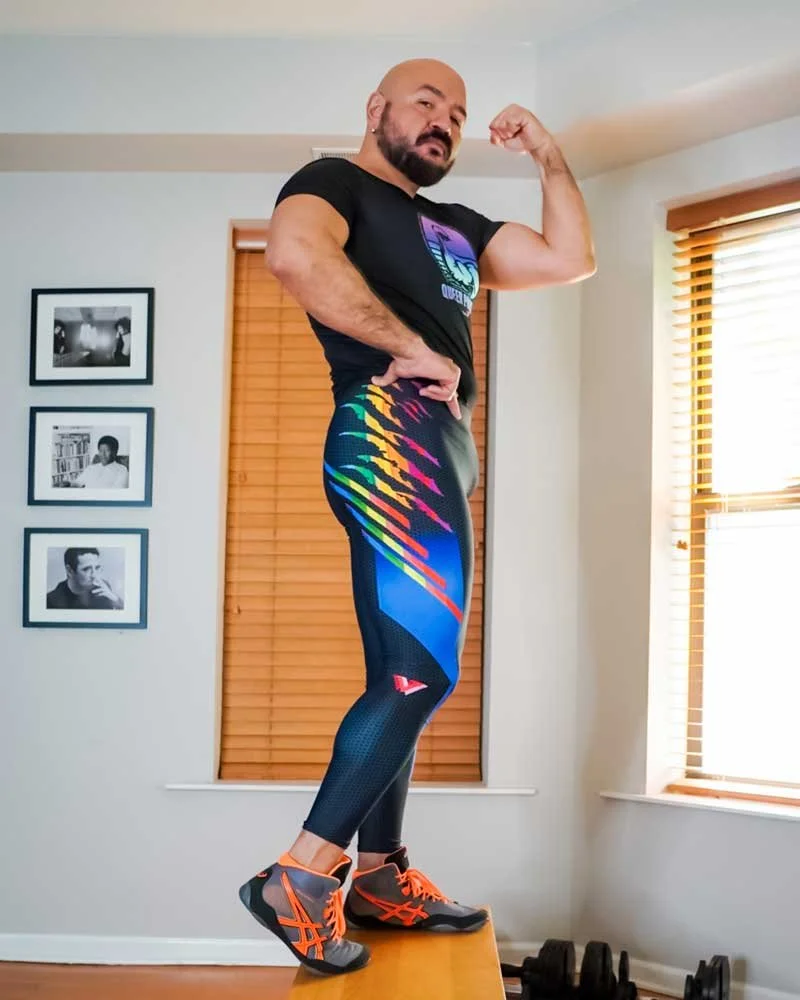
I released Pride Jaguar in June 2021 as a way to express my deep connection to my Mexica ancestors and to my own Aztecverse. Five years later, I am bringing it back. I designed this print myself, cherry-picking every shade of color for the pride motif, building the whole thing around jaguar claws tearing the fabric apart in a savage way. Picture a jaguar in the jungle, fighting beneath the moon. That is the image I was chasing.
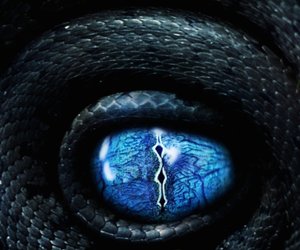
The jaguar is special to me and to my Mexica ancestors. It belongs to the heart of the Mexican people as a mystical symbol and a source of power. It is intelligent. It is fierce. It connects to the night. And it is one of the faces of Tezcatlipoca—the god of transformation and mirrors.
The god hiding in the print
Tezcatlipoca is a god I write about in my latest novel, Hall of Mirrors. When I was designing Pride Jaguar for LED Queens, I was already deep into writing that book as the sequel to 2018's 9 Lords of Night. The two projects were feeding each other the whole time.
I wanted a print that was bold, very sleek, and loaded with texture—the kind of texture that makes the muscles of the body pop. The end result is a type of magic on fabric. It pulls in my strongest energies as an artist and places Tezcatlipoca and fierce queer pride together in a way that never feels obvious, nostalgic, or cliché.
That is the part most people never see. The claws in this design invoke queer pride. The claws are also a powerful god tearing his way into our dimension.
A design you can read like a riddle
For the Mexica, riddles and puzzles were not child's play. They were a respected art form called zazanilli—"conundrums," or "what-is-its." Fray Bernardino de Sahagún documented that the Mexica told these riddles as if they were mysteries. They were a game of hidden connections, built from metaphors rooted in nature, the body, and the cosmos.
A blue bowl filled with popcorn? The star-studded sky. A small mirror in a house made of fir branches? The human eye, framed by its lashes.
Pride Jaguar works the same way. It is a physical riddle. The visual clues are right there on your body, and the answer is a god.
There is a second device at work too—difrasismo. Nahuatl leaned on it heavily: you pair two completely different, concrete things to name a hidden third. Water and mountain become a city. Black ink and red paint become wisdom and writing. What is in the bag and in the box becomes a profound secret.
And the Mexica scribes, the tlacuiloque, did not only speak in difrasismos. They painted them. To an untrained eye, two symbols overlap at random. To an initiated eye, they unlock a different meaning entirely. Pride Jaguar is painted the same way. Jaguar and moon become something I will let you name yourself.
And when a design asks for a deeper vocabulary to fully decode, it crosses into nahuallatolli—"disguised language," the sorcerer's speech once used by priests and master craftsmen to cloak ordinary things inside myth. Firewood became "the bound-up captive." The earth became "the mirror that reflects the world." You do not need to know these words to wear the shorts. But they are the reason the shorts carry weight.
Why I refuse to pick one medium
This is why I live a life designing spandex and also writing novels. I pass through barriers easily. I do not hold myself back to a single medium. For my fans, that means there are tons of easter eggs in everything I make—on the page, on the fabric, in the mirror.
Pride Jaguar is one of the strongest. If you ever wanted the true story behind one of my most powerful LED Queens designs, this is it. Still curious about my spandex legacy? Join the newsletter.